Latitude: 55.1374 / 55°8'14"N
Longitude: -3.6802 / 3°40'48"W
OS Eastings: 292987
OS Northings: 583850
OS Grid: NX929838
Mapcode National: GBR 29R1.15
Mapcode Global: WH5W9.F4RF
Plus Code: 9C7R48P9+XW
Entry Name: Ellisland Farm
Listing Name: Ellisland Farmhouse and Steading
Listing Date: 3 August 1971
Category: A
Source: Historic Scotland
Source ID: 335468
Historic Scotland Designation Reference: LB4232
Building Class: Cultural
Also known as: Robert Burns Ellisland Museum & Farm
ID on this website: 200335468
Location: Dunscore
County: Dumfries and Galloway
Electoral Ward: Lochar
Parish: Dunscore
Traditional County: Dumfriesshire
Tagged with: Museum
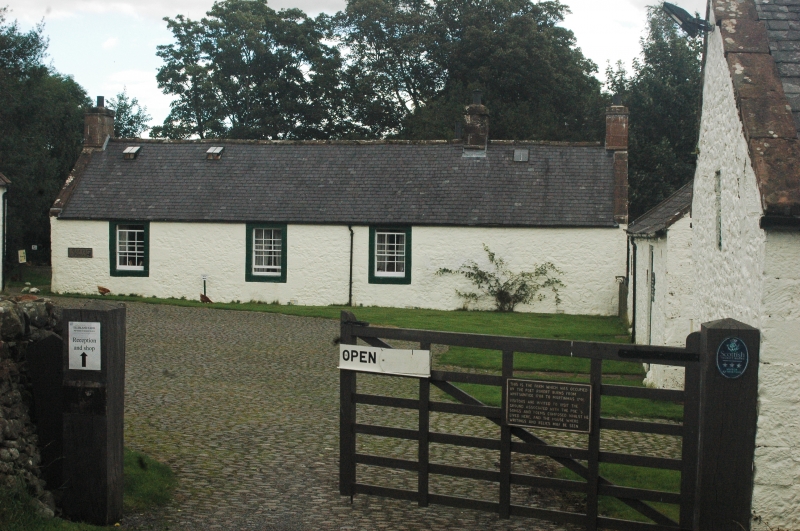
An outstanding example of a late-18th century group of farm buildings that survive relatively unaltered and have a significant historical association with Scotland's National Poet, Robert Burns.
Burns, who is one of Scotland's most important cultural and historical figures, was a tenant farmer at Ellisland from 1788 to 1791. He was responsible for building the farmhouse, barn, and byre and stable, as well as implementing the field enclosures. Inspired by its setting on the River Nith, Burns' literary output during his tenure was exceptional. A quarter of his songs and poems (over 130) were written here, including some of his most celebrated works (Tam o' Shanter, Ae Fond Kiss and Auld Lang Syne).
The site has been in trust since 1928, and the museum holds an outstanding collection of Burns relics, including manuscripts, printed materials, and the poet's personal items.
Some alterations and additions were made to the site, largely in the 19th century, but much of the developments implemented by Burns survive, including the original farmstead and field structure, along with the wider landscape setting. This relative lack of alteration is rare for farmsteadings from this period and can be largely attributed to its longstanding association with Burns. The improvements made by Burns are also important as they reflect a period of significant agricultural advancement and societal change throughout much of Scotland during late 18th century.
Although his tenure was short lived, Ellisland is considered one of the most authentic and significant sites that have a direct association with Robert Burns.
Listed Building Record revised in 2026.
External links are from the relevant listing authority and, where applicable, Wikidata. Wikidata IDs may be related buildings as well as this specific building. If you want to add or update a link, you will need to do so by editing the Wikidata entry.


Other nearby listed buildings